Why Trump can’t just decree changes to voting by mail – a former federal judge explains how the president’s executive order is ‘a solution looking for a problem’
Published in Political News
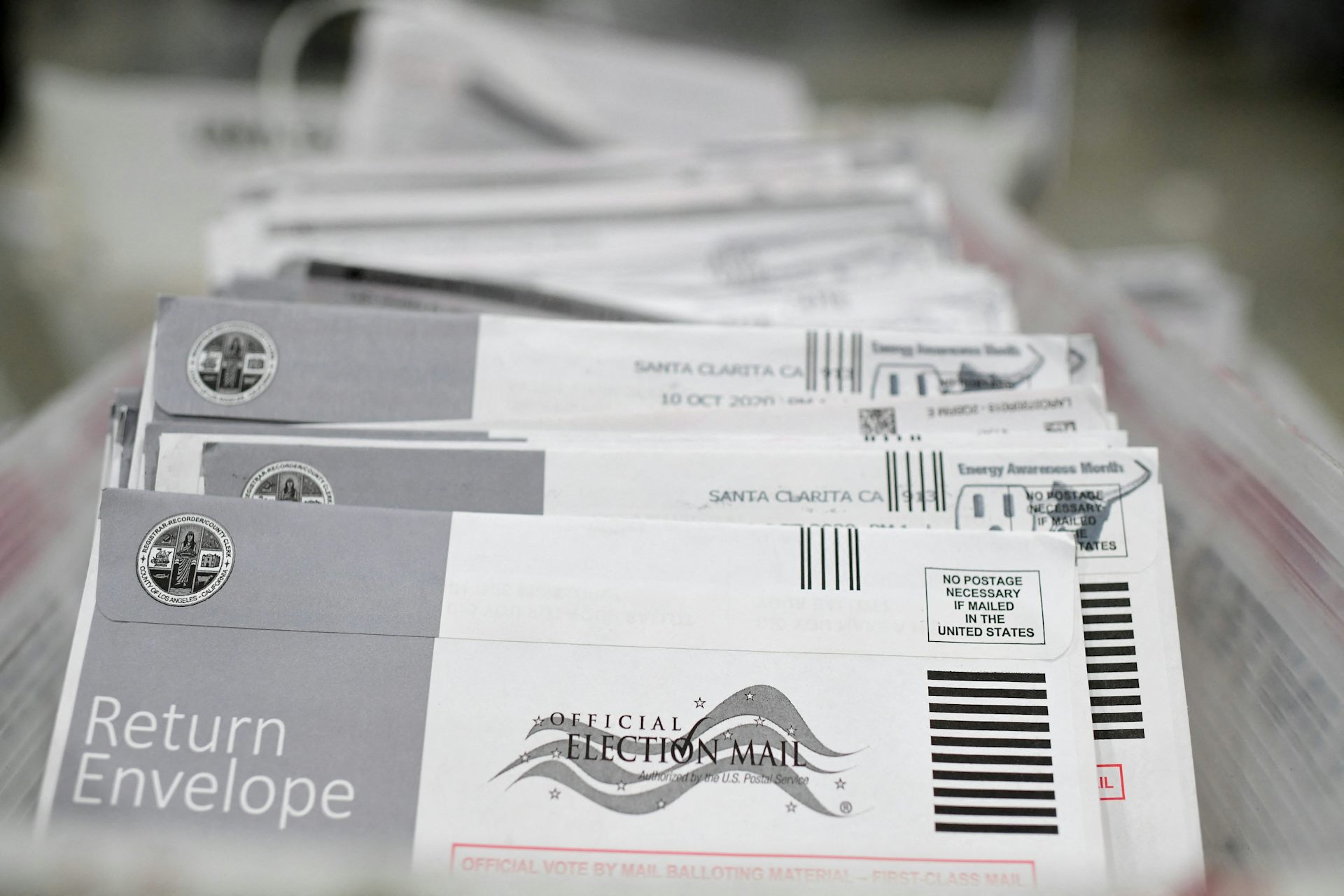
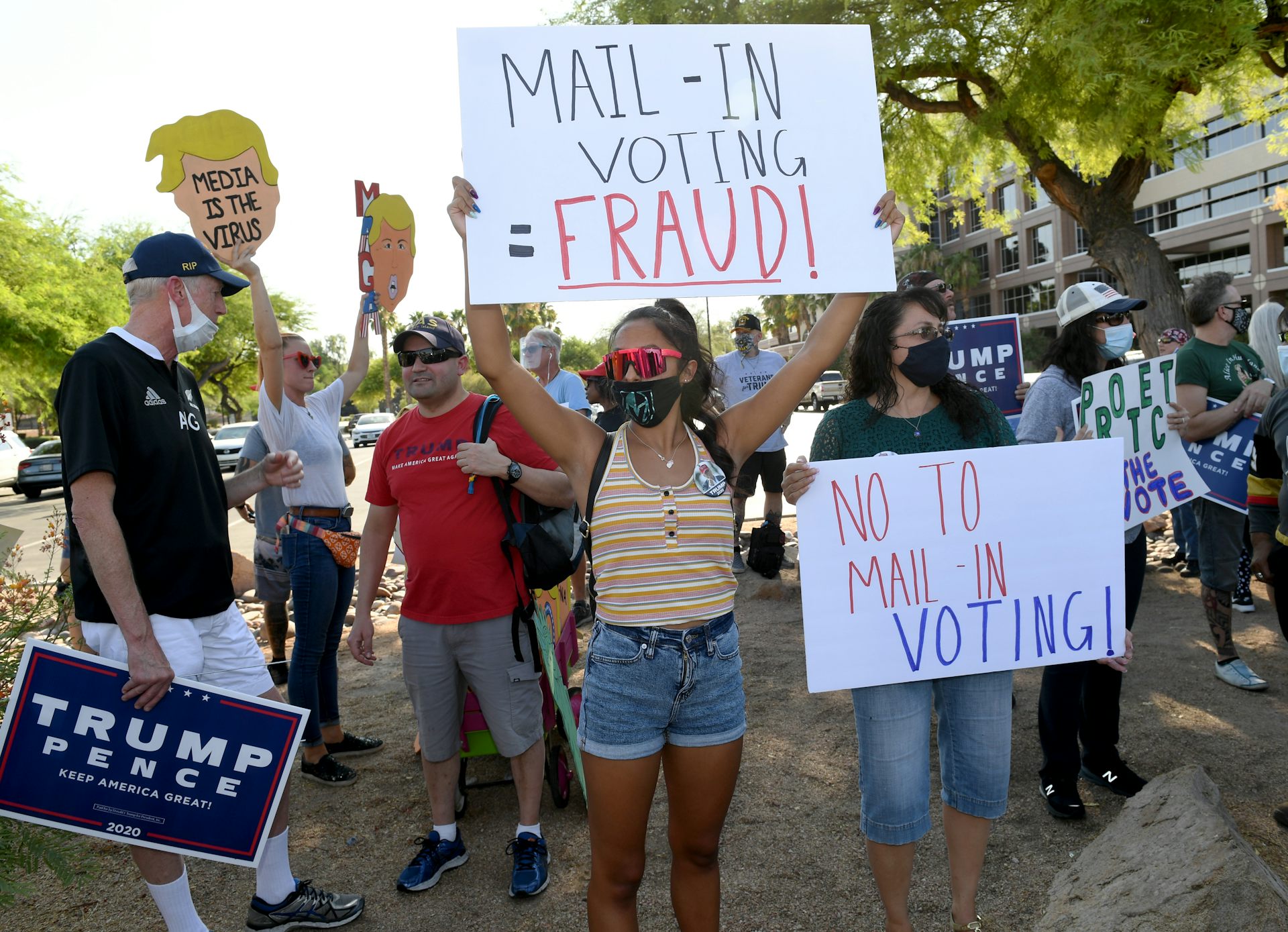
John Jones knows about voter suppression. Currently the president of Dickinson College, Jones – nominated in 2002 by President George W. Bush and confirmed unanimously by the U.S. Senate – served for almost two decades as a federal court judge. In that role, Jones presided over a case, filed just prior to the November 2020 presidential election, in which a conservative legal foundation sued Pennsylvania’s top election official, alleging that she had allowed 21,000 dead people to remain on the voter rolls. The group asked Jones to stop those people from voting.
Jones denied the request. “In an election where every vote matters, we will not disenfranchise potentially eligible voters based solely upon the allegations of a private foundation,” he wrote in his memorandum on the case. In this interview with The Conversation politics and legal affairs editor Naomi Schalit, Jones discusses President Donald Trump’s March 31, 2026, executive order to wrest control of mail-in voting from states and give it to the U.S. Postal Service and the Department of Homeland Security; how the constitutional design of U.S. voting bars such federal control; and how Trump’s order would disenfranchise voters and is now the subject of lawsuits by voting rights groups and 23 states.
Article 1, Section 4, of the Constitution says, “The Times, Places and Manner of holding Elections for Senators and Representatives, shall be prescribed in each State by the Legislature thereof; but the Congress may at any time by Law make or alter such Regulations.” When you saw the executive order by the president, what did you think?
My first thought was, this executive order is dead on arrival. It assumes two problems that really don’t exist.
States are empowered under Article 1, Section 4, of the Constitution to conduct elections and set the time, place and manner of those elections.
The president’s March order asserts that states don’t maintain active and appropriate voter rolls. That’s just not true. State after state takes that very, very seriously, and it’s a principle of federalism that states are given the responsibility for conducting elections. This includes maintaining accurate voter rolls, which, despite the noise to the contrary, states have historically done very well.
The second inaccuracy that undergirds this executive order is that there is rampant fraud in mail-in voting. There is absolutely no evidence to show that that is true.
So you have those twin rationales that are, in my view, demonstrably untrue. And as someone who believes that we need to defer to the laws and the Constitution, not to mention find accurate facts, this is deeply troubling. It’s just beyond the president’s authority to do this.
There are other problems. They are less critical but equally fatal.
President Trump said on signing the executive order that “the cheating on mail-in voting is legendary.” So the order gives the U.S. Postal Service the job of determining who may cast mail ballots, in cooperation with the Department of Homeland Security. Is that one of the problems you see?
That is not what the post office is equipped to do. I could joke here that they have a hard enough time at the U.S. Postal Service getting the mail delivered. Now they’re supposed to develop a program in concert with Homeland Security so that they could work to disqualify voters because they’re not on the list that Homeland Security provides to them that supposedly contains U.S. citizens. Homeland Security is simply not equipped to do this either. This is out of their skill set as well.
What’s the upshot?
Setting aside all the legal and constitutional hurdles, if this would survive judicial scrutiny, it clearly would disenfranchise voters. We have a country that has an increasing group of citizens who really like to vote by mail – including, by the way, the president of the United States.
And now the administration is in effect saying, “We want to make it really, really difficult for you to vote by mail,” because of these contrived and, quite frankly, false premises that have to do with voter rolls and fraud in elections. There are legal challenges over this order in federal courts in D.C. and Massachusetts. The result will be a legal race to see which of those courts enjoins the policy first.
Why does anybody have to sue if this is simply not in the president’s power to make happen?
Because if they don’t sue to enjoin this, since these agencies – the Postal Service and Homeland Security – are under the executive branch, they’ll just go ahead and implement this cumbersome and impossible initiative.
Secretaries of state have pushed back against this. In a separate move by the administration, the Department of Justice has asked states to turn over their voter rolls, and many have refused to do so, standing on the principle that it’s beyond the executive to demand those. Various federal courts have backed the states so far. One of the problems with the request is a lack of confidence that the information can be kept safe by the federal government. And states work very, very hard to do that.
When I was on the federal bench and denied the injunction in the lawsuit filed by a conservative legal foundation that sought to take 20,000 plus voters off the rolls, I did so because there was no good proof that they were, in fact, deceased, which is what the suit asserted. Subsequent to the election, at the now infamous Four Seasons landscaping press conference, Rudy Giuliani was waving my decision in the air and decrying the fact that dead people voted in Pennsylvania. That was simply not true.
These types of hyperbolic claims, made up out of whole cloth, stoke fears. This recent executive order is a solution that is looking for a problem that doesn’t exist.
Why did the framers of the Constitution set up a process where states run elections and not the federal government?
Well, first of all the federal government didn’t have the apparatus to conduct elections. And states had been running elections; they knew how to do it. There was a great deal of trust in the states’ ability to run elections. And there was the core debate of federalism, as to what powers states could retain, and they didn’t want to abdicate many of those powers. There was also a debate about the potential for fraud, that if there was a single entity controlling all the elections – that is, if you centralize elections under one politically motivated executive – it’s a really fraught situation which can be abused.
The Constitution is clear, and unless amended, Article 1, Section 4, is – to use the trite phrase – what it is. The power rests with the states, absent congressional action. There is no mention of the president. None. This executive order is thus, in my view, patently unconstitutional, and I harbor little doubt that it will be found to be so.
This article is republished from The Conversation, a nonprofit, independent news organization bringing you facts and trustworthy analysis to help you make sense of our complex world. It was written by: John E. Jones III, Dickinson College
Read more:
The Department of Justice is suing states for sensitive voter data − an election law scholar explains why federal efforts are facing resistance
Citizenship voting requirement in SAVE Act has no basis in the Constitution – and ignores precedent that only states decide who gets to vote
Why Pete Hegseth’s Pentagon prayer services challenge traditional notions of separation of church and state – but might be blessed by the Roberts Supreme Court
John E. Jones III does not work for, consult, own shares in or receive funding from any company or organization that would benefit from this article, and has disclosed no relevant affiliations beyond their academic appointment.














































Comments