Cruising the Greek Islands: Rhodes, Santorini and Crete
Greece has somewhere between 3,000 and 6,000 islands. Even at the lower number that is a lot of islands, and only a fraction, fewer than 300, are inhabited, some by fewer than 100 people. All are historic, and my cruise, which combined mainland Greece ports with island stops, offered exploration of three of the larger islands as we sailed from Athens to Ephesus in Turkey and back.
Who hasn't heard of the Colossus of Rhodes, one of the Seven Wonders of the Ancient World? It is said that the giant bronze statue, 110 feet tall, stood astride the harbor, one leg on each side. It's a powerful image but sadly not true. The statue, which was destroyed by the earthquake of 226 B.C. less than 60 years after it was erected, actually stood on one side of the harbor. However, as I looked across the water, I preferred to imagine the Colossus in its mythical stance.
Today Rhodes is most famous for its massive (sometimes nearly 40-feet-thick) stone walls and the medieval city they surround, one of the best preserved in Europe. Within the walls lie cobbled streets and alleyways built by the crusader Knights of the Order of Saint John of Jerusalem, who established themselves there after the fall of Jerusalem and Accra. The entire city, actually a fortified castle, is a UNESCO World Heritage Site.
One of the most dramatic streets is aptly named Street of the Crusaders. Perfectly preserved and well cobbled, its straight route lined with Gothic inns that once housed the crusaders culminates in the magnificent Palace of the Grand Master, reminiscent in style and splendor of the Doge's Palace in Venice.
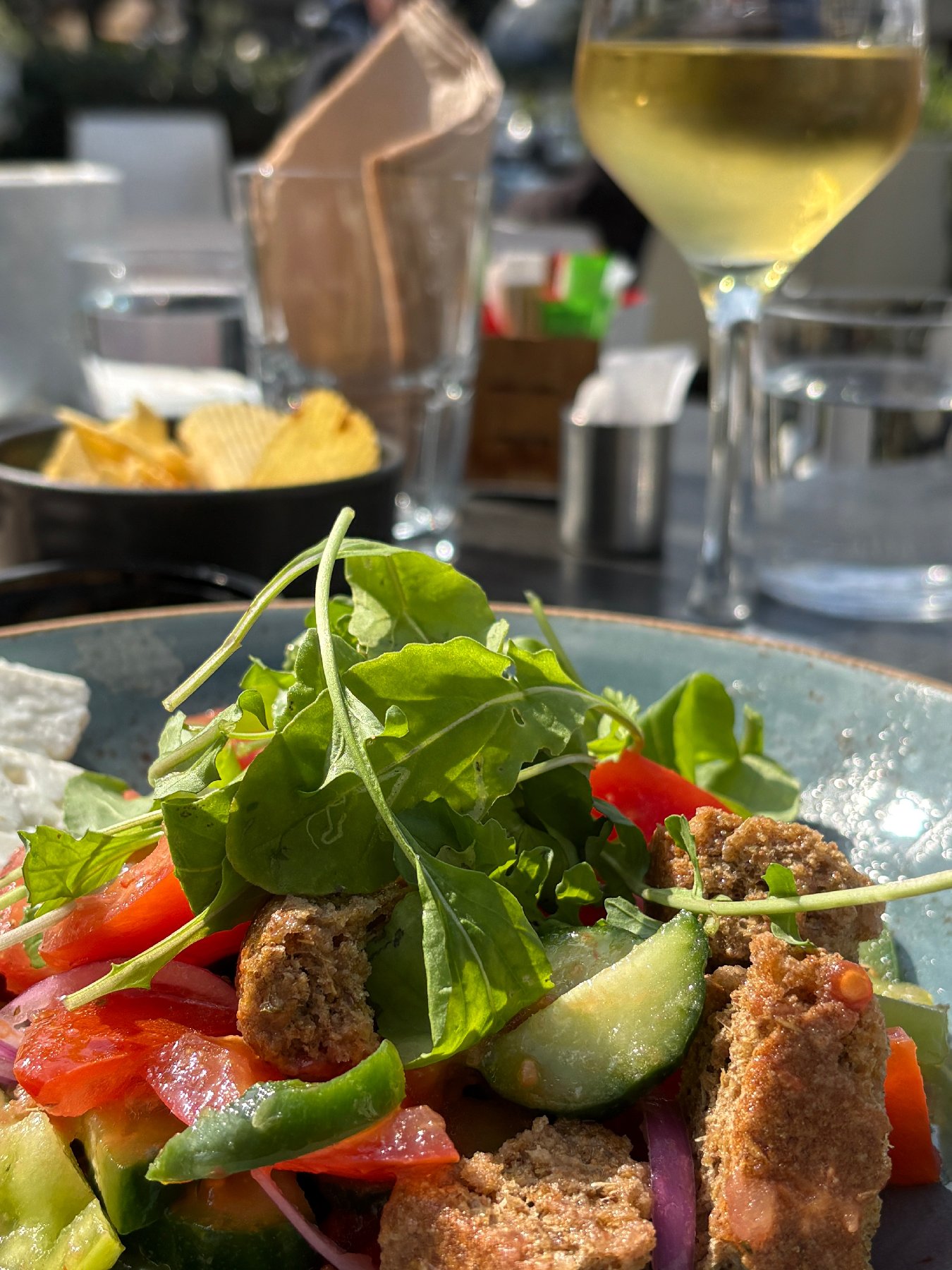
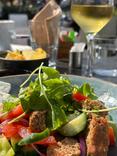
The modern city, with its cafes and restaurants, is easily reached by passing through one of the wall's gates and heading along the shady esplanade toward the pleasure-boat harbor. There my friend and I happily found a yacht club with a restaurant open to the public. Our visit to Rhodes concluded with basking in the sun with an olive-oil drenched Greek salad replete with wedges of feta cheese, cucumber, tomatoes and arugula along with a glass of Greece's famous retsina wine.
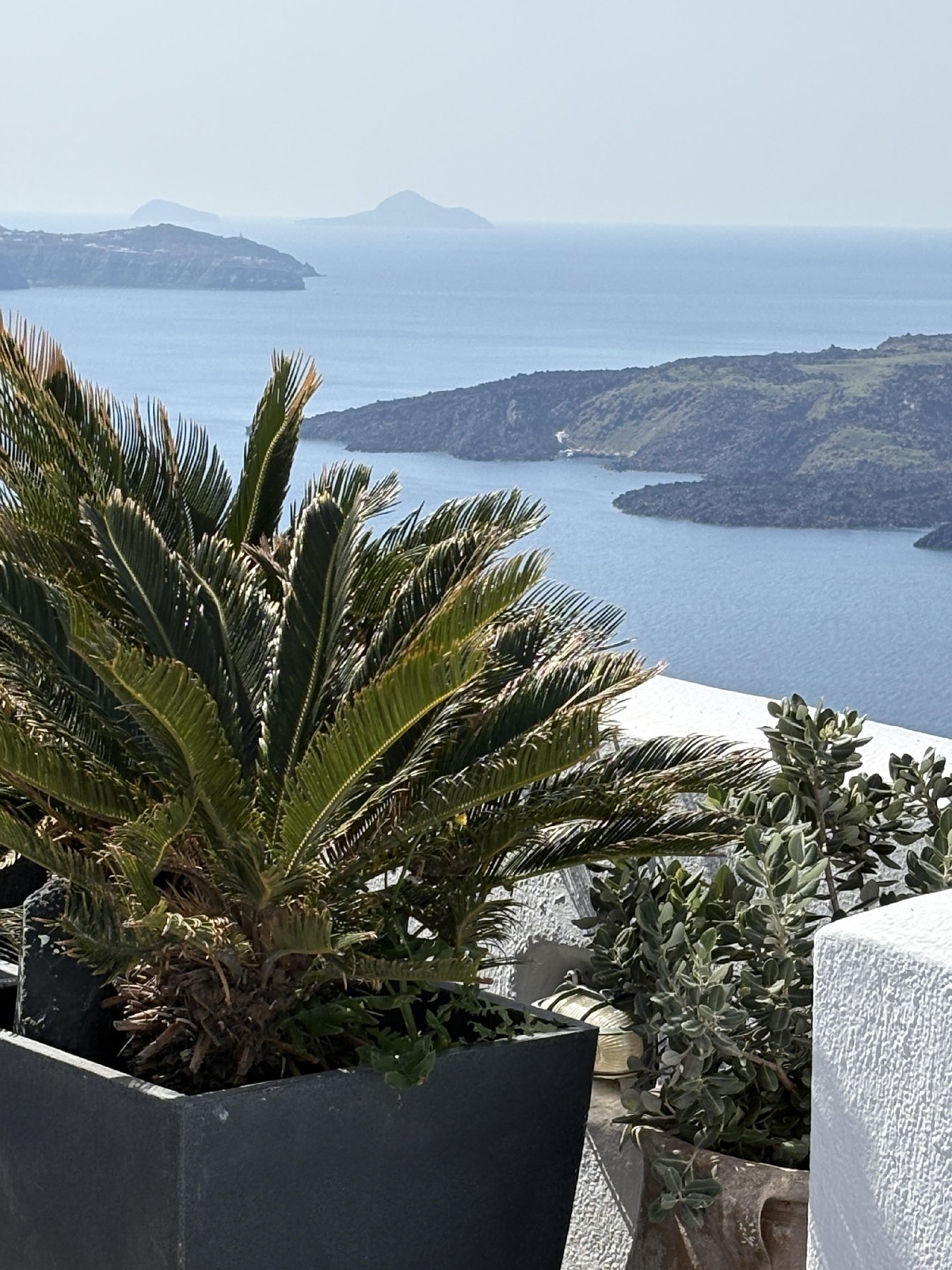
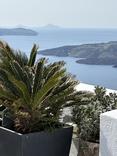
I'd heard about Santorini for years, but I wasn't prepared for the island of rugged mountains crested with all-white buildings, essentially the rim of a volcanic caldera. My ship anchored in the deep, dark blue waters of the caldera, and from there we boarded a tender that took us to the Old Port at the foot of the mountains. Once again, I was glad that I had not opted to take the steep, 588 stairs from the port up to the city, 1,000 feet above, and instead chosen an excursion that would take me by tour bus to two small mountain villages.
However, even the modest bus trip was an adventure as we swung around one white-knuckle switchback after another, climbing the mountain face to reach the plateau where our first village was located. Our guide asked us to follow her across the parking lot, where she pointed out a mass of what looked like scrap heaps of dead grape vines. They were not. They were healthy vines, pruned and wrapped in the centuries-old tradition of the island, called basket-pruning. The method keeps the vines and fruit close to the ground, protecting them from the island's powerful winds and blistering heat.
After exploring the village, walking up the steep streets to reach the church perched at the top, we headed to another village, Pyrgos, to sample an array of Greek food and wine at a local restaurant. Glasses of the island's white assyrtiko wine were poured, and a plate with dolmas, tomato fritters, fava bean spread, tzatziki and fried fish was served to each of us.
But it was in the capital city of Thria as we walked along the street bordering the cliffs that I saw somewhere I had to go. A glass-walled restaurant hung steps below as if balancing on the edge of the cliffs. It was full of laughing, happy people, eating and drinking, and I wanted to be a part of it. There was an empty table, one in from the glass wall. There we knowingly ordered tomato fritters with tzatziki and glasses of assyrtiko wine, all savored as we gazed below at the water-filled caldera of Santorini and beyond across the Aegean.
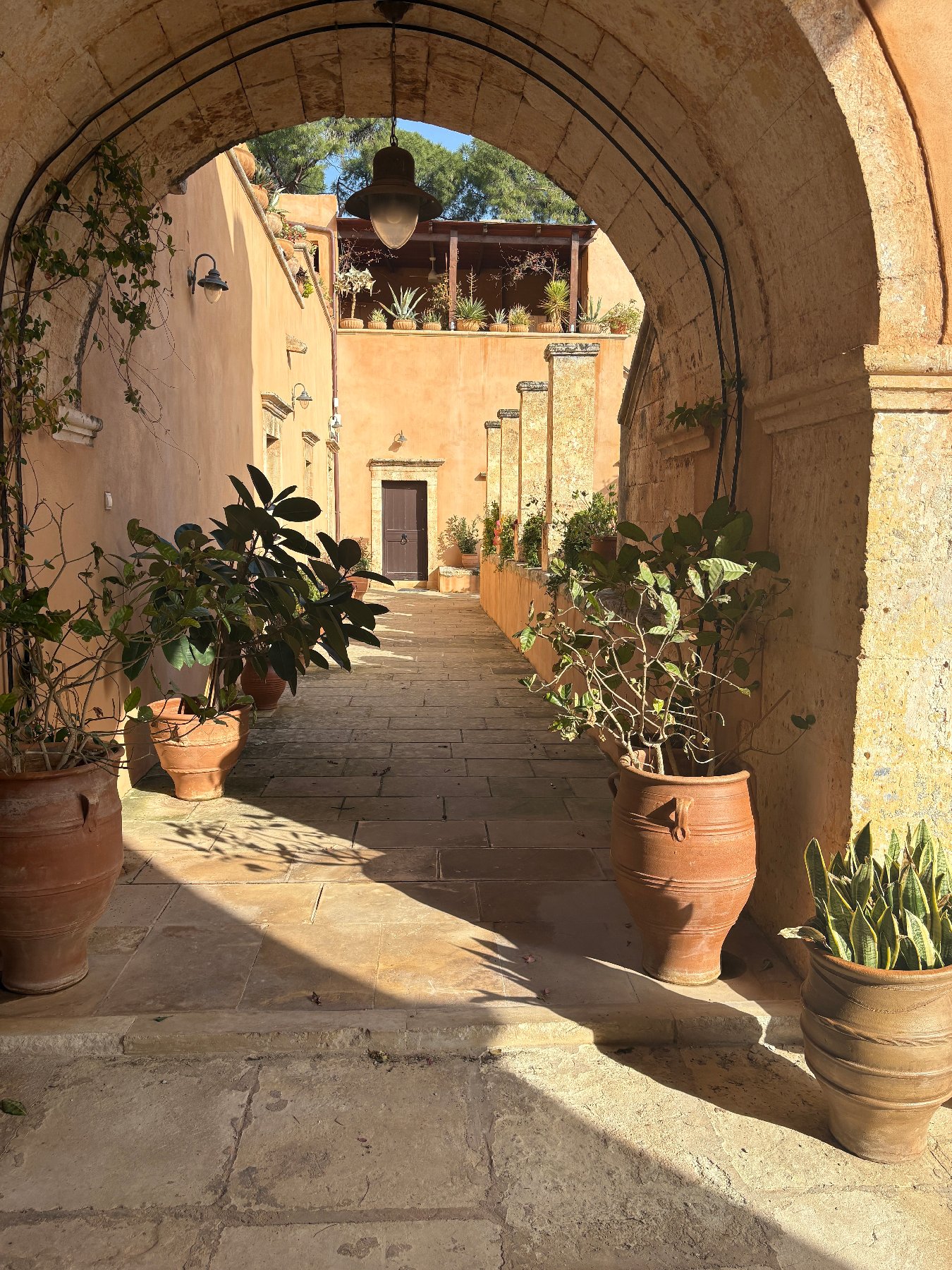
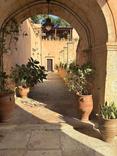
I had been to Crete before and had spent time exploring the fabled Palace of Knossos, heart of the Bronze Age Minoan civilization, and although it was an optional excursion on this cruise, I opted instead for a foray into the countryside to visit a Greek Orthodox monastery. Turning away from Souda Bay and its city of Chania, our bus headed inland, and after a brief drive, passing through olive groves and vineyards, we came in sight of the stunning Eastern Orthodox monastery of Agia Triada.
The church, designed and built in the 17th century by two Venetian brothers when Crete was still part of the Venetian Empire, is awash in the colors of Venice -- salmon-rose, pale orange and soft ochre. Near the church are a museum and a shop that sells the olive oil, wine and preserves made at the monastery, but I felt the soul of the complex was the quiet garden adjacent to the church, where it was almost impossible not to sit and meditate.
But that was not to be. Instead, we returned to busy, bustling Chania to walk along the city's Venetian harbor, built in the 14th century, and found a waterfront restaurant whose chalkboard advertised one of my favorite dishes, grilled sardines. A platter of these plus the salad of the day and a glass of the local wine set the stage for a final afternoon of shopping before returning the ship for a farewell dinner and setting sail for Athens.
----
WHEN YOU GO
For more information: vikingcruises.com
========
Georgeanne Brennan is a freelance writer. To read features by other Creators Syndicate writers and cartoonists, visit the Creators Syndicate website at www.creators.com.
----
Copyright 2026 Creators Syndicate, Inc.























Comments