The Outfit That Never Happens: Clothes We Plan to Wear vs Clothes We Actually Wear
Published in Fashion Daily News
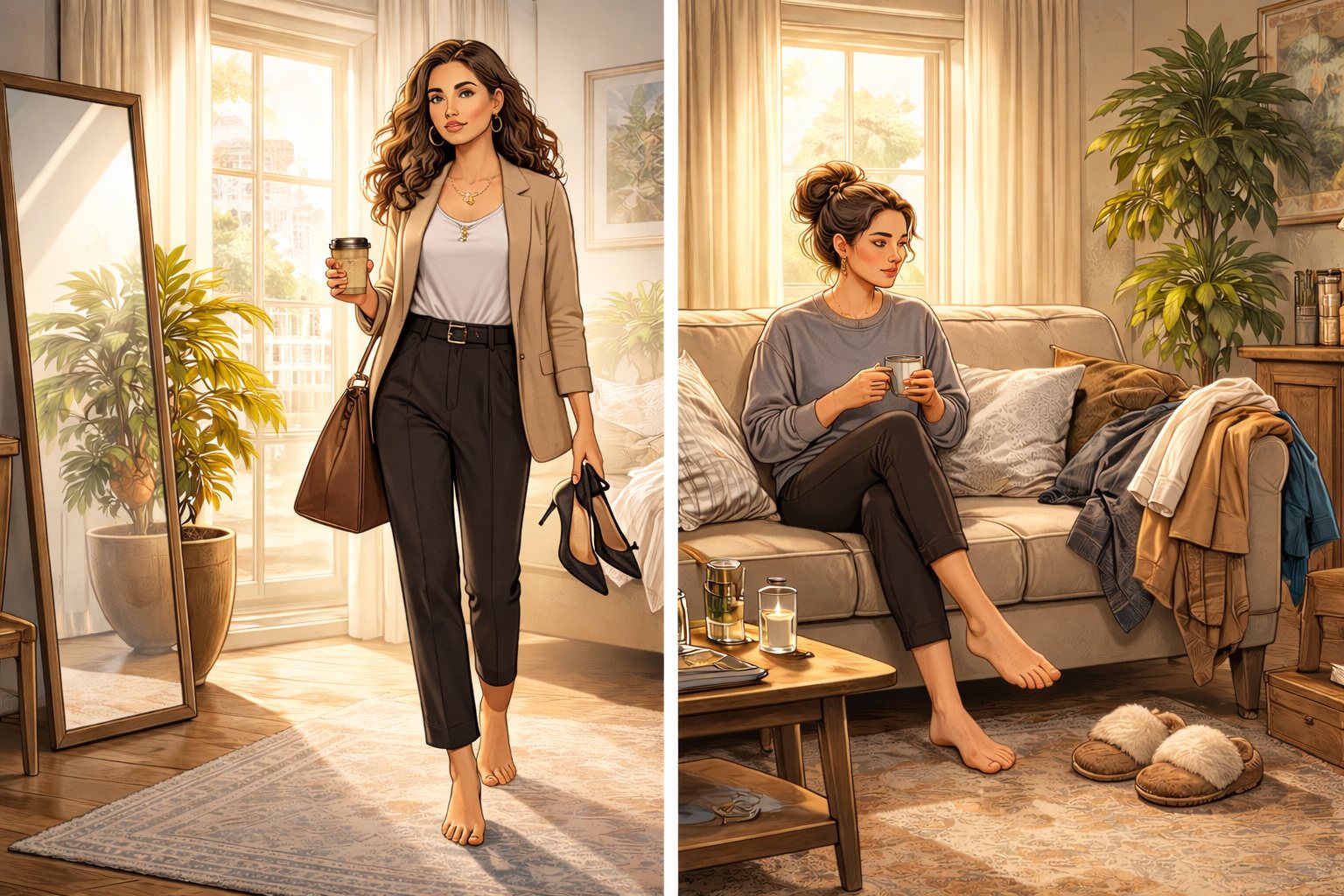
The outfit begins, as many things do, with intention.
It lives in the mind first: structured, composed, just a little aspirational. A certain jacket, maybe, with a pair of trousers that suggest competence without trying too hard. Shoes that say you are the kind of person who plans ahead. It is, in its way, a quiet act of storytelling—the version of yourself you expect to inhabit for the day ahead.
And then, somewhere between the closet and the front door, something shifts.
The jacket feels like too much. The trousers pull in a way they didn’t yesterday. The shoes—perfect in theory—suddenly seem impractical, or loud, or simply not aligned with the mood of the morning. The outfit that existed so clearly just minutes before dissolves, replaced by something softer, simpler, more immediate.
This is the outfit that actually happens.
The Fantasy Self vs. The Morning Self
Most people maintain, whether consciously or not, two parallel wardrobes. One is aspirational: the clothes that represent who we think we are, or who we would like to be. The other is operational: the clothes we reach for when time, comfort, and reality assert themselves.
The gap between these wardrobes is where the “never happens” outfit lives.
It is not that the aspirational wardrobe is false. In fact, it is often deeply honest. It reflects taste, identity, and a genuine sense of self. But it exists in a frictionless environment—one without weather, deadlines, or the small physical negotiations of daily life.
The morning self, by contrast, is pragmatic. It is aware of temperature, of how the body feels, of how long the day might be. It chooses differently, not out of failure, but out of context.
The Chair of Almost-Outfits
In many homes, there is a chair that quietly documents this tension.
It holds the clothes that were tried on and set aside: a shirt that almost worked, a pair of pants that felt right until they didn’t, a layer added and then removed. These garments are not rejected outright. They are paused, suspended between intention and reality.
The chair is not clutter. It is evidence.
Each item represents a small negotiation. A moment where the imagined self met the actual self and, for reasons both subtle and immediate, chose differently.
Over time, the chair accumulates a kind of narrative. It tells the story of a week, a mood, a season of life in which certain versions of oneself are explored but not quite inhabited.
Comfort as Culture
In recent years, the balance between aspirational and operational wardrobes has shifted. Comfort, once considered secondary, has moved to the center.
This change is not merely aesthetic. It reflects broader cultural adjustments—work becoming more flexible, social norms loosening, and a growing acceptance that clothing should accommodate the body rather than discipline it.
The “outfit that never happens” often belongs to an earlier model of dress: one that prioritizes structure, presentation, and a certain external polish. The outfit that does happen is more likely to prioritize ease, movement, and adaptability.
This does not mean style has disappeared. Rather, it has been reframed. The question is no longer “Does this look right?” but “Does this feel right for the day I am actually going to have?”
Identity in Motion
Clothing has always been a way of expressing identity, but identity itself is not fixed. It shifts with mood, context, and time.
The outfit imagined the night before may align with a version of the self that no longer feels present in the morning. Fatigue, weather, unexpected obligations—any number of factors can alter how a person wants to move through the world.
In this sense, the “never happens” outfit is not a failure of execution. It is a snapshot of a different moment, a different internal state.
The act of changing course—of choosing something else—is not abandoning identity, but updating it in real time.
The Myth of Being Put Together
There is a persistent cultural narrative that equates consistency in appearance with competence or control. To be “put together” is to present a stable, curated version of oneself, day after day.
But the reality of most lives is more fluid.
Clothes wrinkle. Bodies change. Days unfold unpredictably. The idea that one can—or should—maintain a perfectly aligned outward presentation ignores the complexity of lived experience.
The outfit that actually happens is often more truthful. It reflects not just who a person is in theory, but who they are in practice, on that particular day.
Rewearing as Confidence
One of the quieter shifts in contemporary style is the normalization of repetition.
Where once there was pressure to vary one’s appearance constantly, there is now a growing acceptance—even appreciation—of returning to the same pieces again and again. A favorite pair of pants. A well-worn sweater. Shoes that have proven themselves reliable.
This repetition is sometimes mistaken for a lack of effort. In reality, it can signal a kind of confidence: an understanding of what works, and a willingness to prioritize that over novelty.
The “never happens” outfit often competes with these known quantities. It offers possibility, but not certainty. And in the calculus of a busy morning, certainty tends to win.
Making Peace With the Gap
The space between the outfit we plan and the outfit we wear is not something to be eliminated. It is something to be understood.
It reveals the tension between aspiration and reality, between identity and context. It shows how people negotiate their lives in small, daily ways—through fabric, fit, and feel.
There is value in the imagined outfit. It points toward taste, toward possibility, toward the parts of the self that are still being explored. There is equal value in the outfit that actually happens. It reflects presence, adaptation, and the practical wisdom of lived experience.
Together, they form a more complete picture.
The outfit that never happens is not wasted. It lingers, waiting for a different day, a different mood, a different version of the self to bring it to life.
And until then, it rests—on the chair, in the closet, or simply in the mind—part of the quiet, ongoing conversation between who we are and who we are becoming.
========
Clara Venn is a style and culture writer who explores the intersection of clothing, identity, and everyday life. Her work focuses on the subtle decisions that shape how people present themselves to the world. This article was written, in part, utilizing AI tools.






Comments