The Floor Is the Outfit: Dressing for Where You Actually Live
Published in Fashion Daily News
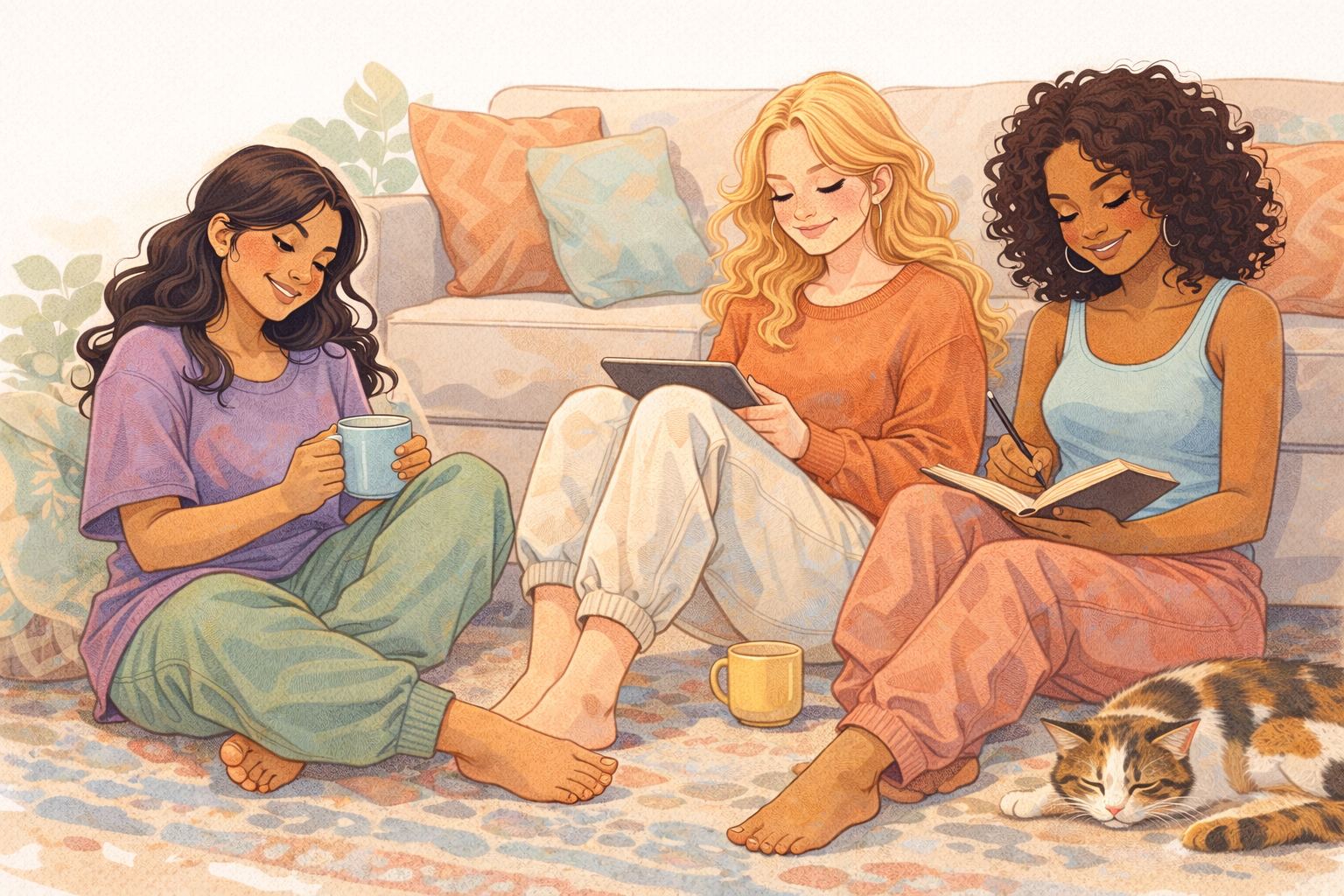
Most wardrobes are built for a version of life that rarely happens. Upright, composed, seen from a polite distance—walking into rooms, standing at counters, moving through public space. But at home, where most living actually occurs, bodies fold. They sit, lean, curl, stretch, and settle. The couch, the rug, the edge of a bed—these become the true stage of daily life.
“The Floor Is the Outfit” reframes how clothing functions in that reality. It asks a simple question: if you spend most of your time seated, cross-legged, or reclined, why are your clothes designed for standing still?
Standing Clothes in a Sitting World
Fashion has long prioritized silhouette over sensation. Garments are cut to look good in motion or at attention—tailored lines, structured waists, hems that fall just so when vertical. But the moment you sit, those assumptions collapse.
Waistbands dig. Seams twist. Fabrics pull in places they were never meant to stretch. What looked effortless standing in front of a mirror becomes restrictive on a couch or impractical on the floor.
This disconnect is not accidental. Much of fashion still orbits around visibility—how an outfit reads to others. But at home, the audience disappears. What remains is the lived experience of the wearer.
Clothing that performs well in private spaces must adapt to gravity differently. It must allow for folding, compression, and asymmetry. It must function when the body is not presenting itself, but simply existing.
The Geometry of Comfort
Sitting cross-legged, one knee raised, feet tucked under—these are not incidental positions. They are the default postures of relaxation. Yet most clothing treats them as edge cases.
Soft waistbands, flexible fabrics, and forgiving cuts become essential in this context. A garment that accommodates a folded body without resistance changes how a person inhabits their space. It removes friction—literally and figuratively.
There is also a tactile dimension. When you sit on the floor, your clothes are no longer just what others see. They are what you feel against rugs, cushions, hardwood, or carpet. Texture matters. Breathability matters. The interaction between fabric and environment becomes part of the outfit.
This is where traditional fashion language often falls short. It rarely accounts for contact—only appearance.
The Politics of Being Comfortable
Choosing comfort over presentation is not always a neutral act. For decades, particularly for women, there has been an implicit expectation that clothing should prioritize how it looks over how it feels.
To dress for the floor is to quietly reject that hierarchy. It centers the wearer’s experience over the viewer’s perception. It suggests that ease, softness, and adaptability are not compromises, but values.
This does not mean abandoning style. It means redefining it. A well-worn pair of soft pants, a loose top, bare feet on a rug—these can form an aesthetic just as intentional as any tailored outfit. The difference is that the intention is inward-facing.
There is a subtle confidence in that choice. It says: this is how I live, and my clothes will meet me there.
When the Room Completes the Outfit
At home, clothing does not exist in isolation. It interacts with the environment in a way that public fashion rarely does. A soft rug, a worn couch, a stack of pillows—these elements become extensions of what you wear.
A person seated on the floor is not just dressed in fabric. They are framed by texture, color, and space. The room becomes part of the composition.
This is why certain outfits feel right in certain environments. A loose knit top belongs on a couch. Lightweight, flexible pants make sense on a rug. The outfit and the room reinforce each other.
It is also why overly structured clothing can feel out of place at home. It resists the environment instead of integrating with it.
Barefoot as Default
One of the clearest expressions of this philosophy is the absence of shoes. At home, footwear often becomes unnecessary—an extra layer that separates the body from its surroundings.
Bare feet change how a person moves and settles. They allow for direct contact with surfaces, adjusting instinctively to texture and temperature. They also influence posture, encouraging more natural, grounded positions.
From a design perspective, this shifts the visual balance of an outfit. The lower half of the body is no longer anchored by shoes, which often serve as focal points in traditional styling. Instead, the emphasis moves to proportion, fabric, and how the body interacts with space.
Barefoot living is not just about comfort. It is about connection—to the environment, to the body, and to the rhythms of home.
Durability in the Real World
Clothing designed for lived environments must also withstand them. Sitting on floors, leaning against furniture, and moving through daily routines introduces wear patterns that standing clothes rarely consider.
Knees take pressure. Seams experience repeated stress. Fabrics encounter friction from surfaces that are not always forgiving. Durability becomes as important as softness.
This is where quality and construction matter. Reinforced stitching, resilient materials, and thoughtful design choices extend the life of garments that are truly lived in.
It also reframes wear itself. A softened fabric, a slightly faded color—these become markers of use, not flaws. They tell a story of how the clothing has adapted alongside the wearer.
Redefining the Everyday Wardrobe
To dress for where you actually live is to align clothing with reality. It is to acknowledge that most of life happens in moments of rest, not presentation. That comfort and adaptability are not luxuries, but necessities.
This shift does not require a complete overhaul of a wardrobe. It begins with awareness—paying attention to how clothes feel in the positions you actually occupy. It continues with small adjustments: choosing softer fabrics, looser cuts, more forgiving structures.
Over time, these choices accumulate into a different kind of style. One that prioritizes lived experience over imagined scenarios. One that fits not just the body, but the life being lived within it.
The Floor, Reconsidered
The floor is often treated as secondary—a place for furniture, not for people. But in many homes, it is where life unfolds most naturally. Where conversations happen, where pets settle, where bodies relax without pretense.
To dress for the floor is to recognize its importance. To design clothing that supports the way people actually inhabit their spaces.
It is a quiet shift, but a meaningful one. Because when clothing aligns with reality, it disappears as a source of friction. It becomes part of the environment—supportive, adaptable, and unobtrusive.
And in that absence of resistance, something else emerges: ease.
========
Marin Kepler is a lifestyle writer exploring the intersection of design, habit, and the unnoticed details of domestic life. Her work focuses on how environments shape the way we move, dress, and settle into our routines. This article was written, in part, utilizing AI tools.





Comments