Exercise reverses muscle aging; scientists now know why
Published in Senior Living Features
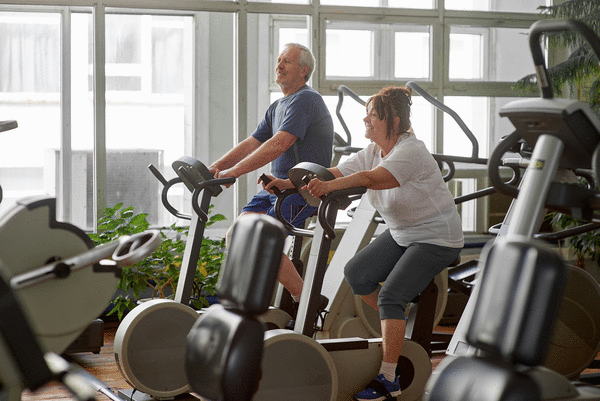
Exercise helps restore natural repair systems in muscle cells that become out of balance with age, according to new research from Singapore.
Atrophy and loss of individual muscle fibers increase with age, boosting the risk of falls and fractures as well as chronic diseases, according to findings published by the National Institutes of Health. Many people begin to lose muscle mass in their 40s, and may lose as much as half of their muscle tissue by their 80s.
The cause of muscle loss has remained unclear — until now.
Researchers from Duke NUS Medical School in Singapore found a gene that increases activity, pumping out a growth regulator called mTORC1 and increasing new protein production within the cell, while older damaged proteins are no longer cleared away.
Exercise suppresses the gene, called DEAF1, allowing proper cell maintenance to resume, Assistant Professor Tang Hong-Wen, the study’s lead author, told ScienceDaily.com.
“Exercise can reverse this process, correcting the imbalance,” he said. “Physical activity activates certain proteins which lower DEAF1 levels, bringing the growth pathway back into balance. This allows aging muscles to clear out damaged proteins, rebuild themselves properly, and helps them stay stronger and more resilient.”
The researchers published their findings in the Proceedings of the National Acadamies of Science.
In some older muscles, however, an overactive DEAF1 gene can reduce the effectiveness of physical exercise, Hong-Wen said. In those cases, exercise itself may not be adequate to restore the balance.
The research team tested their findings in flies and mice and were able to affect muscle growth or deterioration by manipulating the gene. Their positive results suggest ways to target DEAF1 in seniors who do not see benefits from exercise.
The findings also have implications for people recovering from surgery, illness or chronic diseases like cancer. Targeting DEAF1 could help those individuals maintain muscle strength when physical exercise may be limited.
“Exercise tells muscles to ‘clean up and reset.’ Lowering DEAF1 helps older muscles regain strength and balance, almost like hitting the rewind button.” research assistant Priscillia Choy Sze Mun told ScienceDaily. “With millions of older adults at risk of muscle decline, understanding DEAF1 could lead to new ways to protect muscles and improve quality of life.”






Comments