A timeline of Rep. Ilhan Omar's immigration to the US
Published in Political News
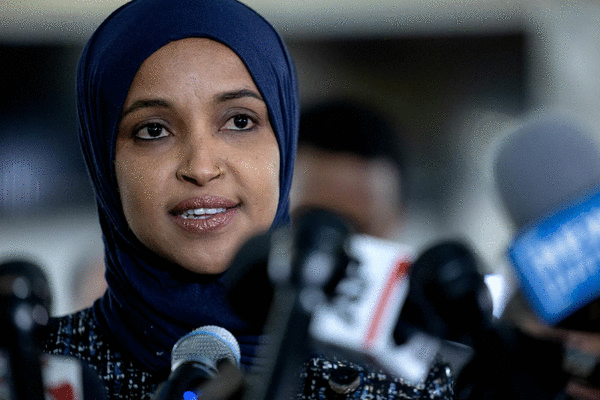
The federal raid on U.S. Rep. Ilhan Omar’s Washington, D.C., home has raised questions about what led to an investigation into the Minnesota lawmaker.
Homeland Security Investigations agents, not FBI officers, carried boxes of evidence from Omar’s home, indicating that the search was related to Omar’s immigration status.
Top officials hinted at an investigation into Omar earlier this year, saying the progressive Democrat may have committed immigration fraud when she entered the U.S.
Omar called the raid an attempt to “weaponize federal law enforcement” to intimidate politicians.
What do we know about Omar’s immigration to the U.S.?
Omar and her family arrived in the United States in March 1995, according to a magazine article from The Nation republished on Omar’s district website. She was 12 years old when she relocated to the U.S. with her father and six siblings. Her grandfather would later join them. Omar’s mother died when she was a toddler.
Omar’s family fled war that consumed her home country of Somalia, spending four years in a Kenyan refugee camp, according to info on her website and her autobiography, “This Is What America Looks Like: My Journey from Refugee to Congresswoman.” They weighed moving to Norway, Canada or another Scandinavian country, but her grandfather motivated the family to pick America.
“The United States is different,” her grandfather said, according to Omar’s memoir. “Only in America can you ultimately become an American. Everywhere else we will always feel like a guest.”
The family spent their first night in the United States in New York City before they continued to Arlington, Va.. Omar and her family moved to Minneapolis in 1997. Minnesota was an attractive option because it had the largest concentration of Somalis in the country and Omar’s grandfather had already settled there.
Omar picked up odd jobs at Target and the post office before attending North Dakota State University, but continued to pursue politics while being inspired by late Sen. Paul Wellstone.
“He was the essence of grassroots mobilization. There wasn’t a community that he wasn’t willing to touch and engage with,” Omar said in The Nation story. “A lot of my friends in the Somali community, who I came up with around political organizing, worked for him, and knew him deeply and got their start there.”
White House border czar Tom Homan and Vice President JD Vance said earlier this year that Omar was being investigated for alleged immigration fraud. Vance mentioned the investigation during an interview in March with podcast host Benny Johnson, saying, “We actually think that Ilhan Omar definitely committed immigration fraud against the United States of America.” Homan confirmed the investigation during an interview with reporter Jacqui Heinrich in September, adding that “no one is above the law” and that HSI will continue investigating.
It’s unclear where the search of Omar’s home could lead, but former federal prosecutors say the move breaks precedent by investigating a congressmember weeks before an election. Omar’s office issued a statement saying the investigation is an abuse of power targeting political enemies, adding that “the congresswoman has done nothing wrong.”
_____
©2026 The Minnesota Star Tribune. Visit startribune.com. Distributed by Tribune Content Agency, LLC















































Comments