Commentary: Wildfires will only get worse until the US stops ignoring the climate crisis
Published in Op Eds

President Donald Trump argued last month that Canada should pay damages — or face additional tariffs — for the wildfire smoke recently “poisoning” American air, and claimed that he strong-armed Canadian Prime Minister Mark Carney during the World Cup final in New Jersey, telling Carney he needed to stop the fires.
To Trump and the Michigan members of Congress who recently declared in a letter that their “patience has run out” with Canada over the wildfire smoke: I get where you’re coming from. As a Canadian, I’d love nothing more than to stop the haze drifting over the border. The air is thick, the sunsets are unsettling and your constituents — just like ours — are coughing through summers that are no longer what they used to be.
But here’s the thing: Demanding compensation while gutting climate policy is asking Canada to put out the fires while Washington keeps adding more fuel.
The smoke blanketing part of the U.S. isn’t just a forest management problem. It’s a climate problem. Canada’s 2023 wildfire season was the worst in our history, with more than 45 million acres burned — an area considerably larger than Michigan. And by July 17 of this year, another 5.9 million acres of land was lost to fire.
Yet Washington continues to dismantle previous efforts by the U.S. government to tackle climate change. Trump and his team are greatly accelerating fossil fuel development while dismantling many of the policies designed to limit its effects. They have rolled back clean energy initiatives, weakened environmental review and loosened critical methane regulations. The administration is even paying companies to dismantle massive wind turbine projects that would have delivered clean energy to millions, all in the name of a Luddite ideology that makes life on our planet less tenable.
The result will be high greenhouse gas emissions, a faster-warming climate and more summers filled with wildfire smoke blanketing the skies.
The changes under Trump are not minor technical tweaks. They are political choices that will increase emissions and lock in new fossil fuel infrastructure, making the conditions that drive today’s severe wildfire seasons that much worse. If you think the smoke is bad now, just wait until those projects start operating at full capacity.
Trump is now threatening Canada with tariffs and demanding damages for pollution while his administration expands the industry principally responsible for heating the planet. The members of Congress who wrote the letter to Canada voted for policies that are making the smoke problem worse. The audacity is stunning.
The letter points to shortcomings in Canada’s forest management, and argues that Canada has underinvested in thinning forests, fuel reduction, prescribed burns and enforcement against arson. Canada should certainly do more to prevent and fight wildfires. More than 5,300 firefighters were battling the fires, and Canada should commit additional funding to preventing these blazes before they start, while strengthening preparedness and emergency response.
But forest management alone cannot address the hotter, drier conditions that are making fires more intense and more difficult to control — that requires confronting the underlying crisis. As emissions rise, Canada’s forests are following the same trajectory as in California: a warming climate is leaving them hotter, drier and primed to burn. The atmosphere does not recognize borders, and certainly doesn’t care about presidential threats. It makes little difference whether the pollution comes from Texas, Pennsylvania or Alberta. It contributes to the same warming that dries forests and intensifies fires across the continent.
Wildfires are also one of North America’s fastest-growing public health threats. The smoke now choking the air contains PM2.5 particles — tiny pollutants that can penetrate deep into the lungs and bloodstream, raising the risk of asthma and serious cardiovascular disease, while contributing to premature death. In 2023, more than 120 million Americans were exposed to wildfire smoke for prolonged periods, including communities across Michigan.
Children, seniors and people with preexisting health conditions are especially vulnerable, particularly in rural areas where hospital closures and underfunded clinics leave too many people without adequate care.
An angry letter won’t protect those communities. Neither will a tariff or a demand that Canada write a check. You need policies that cut emissions through a shift to cleaner energy while helping communities adapt to what’s now an annual crisis.
The smoke drifting south may come from Canadian forests — but the political winds making it worse are also coming from Washington. Unless the United States changes course, next summer will probably look just like this one. Or worse.
To the people of Michigan and the rest of the United States: If you’re tired of breathing wildfire smoke every summer while lawmakers blame Canada instead of tackling climate change, speak up. Demand an end to new fossil fuel projects.
Unless we dramatically reduce emissions, the smoke will keep coming — every summer, every year. And no tariff will stop it.
____
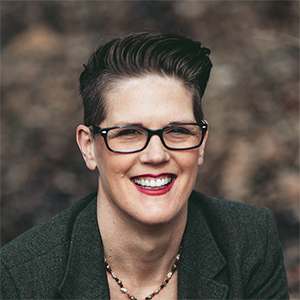
Felix Horne is a senior expert with Climate Rights International based in Ottawa.
©2026 Los Angeles Times. Visit at latimes.com. Distributed by Tribune Content Agency, LLC.


















































Comments