Commentary: What the tangle of cables under LA's streets can tell us about the city
Published in Op Eds
Back in 2017, the Economist ran a cover story calling data the “new oil.” The phrase has worn well, artificial intelligence has made sure of that. After all, AI is nothing without data to train on.
Thus, the race for new data sources has reached unprecedented levels, unsurprisingly at the expense of our privacy. Just this month, a new class action made headlines accusing Meta’s Ray-Bans with built-in cameras of recording moments including private sexual acts and trips to the toilet, all without consent. But useful information need not be so intrusive, especially in cities.
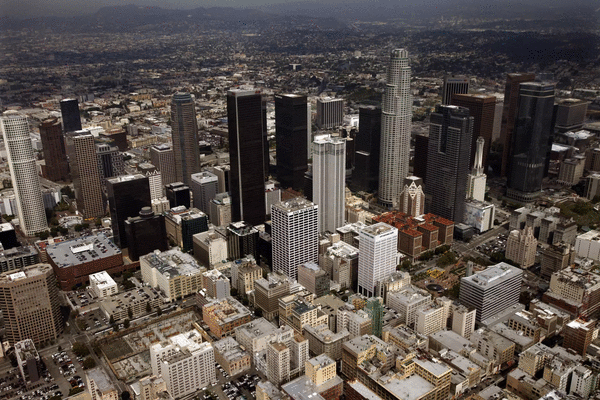
Beneath our feet lies a hidden nervous system: thousands of miles of fiber-optic cables invisibly snaking under the streets of Los Angeles and the Bay Area, like strands of angel hair. These cables carry the lifeblood of the information economy — phone calls, messages, data streams. They transmit our collective digital stories, but they could also tell new, crucial stories of their own — stories about traffic patterns, city life, infrastructure health and even earthquake risk.
Repurposing existing communication infrastructure to “sense” cities — that is, to learn about and understand everything about a city, from overcrowded streets to overflowing bins and air pollution — is not a new idea.
Over the past two decades, urban environments have been mapped using many sources of data including GPS and telecom signals. In the early 2000s, the MIT Senseable City Lab launched the world’s first project using anonymized mobile phone information to visualize urban activity across an entire city — something that now feels ordinary whenever we open Google Maps. This method, known as “opportunistic sensing,” involves transforming infrastructure built for one purpose into a tool for another.
Since their introduction in upstate New York in the 1970s, fiber-optic cables have become the backbone of global digital connectivity — spanning continents and linking homes, businesses and cities. While fiber-optic cables weren’t designed for urban sensing, their ability to transmit light with precision makes them highly sensitive to physical disturbances. A small vibration, a shift in temperature or even a slight change in length can alter their transmission properties. With the right tools, these subtle changes can be turned into information, yielding valuable insights into urban life. And that’s where our project begins.
As we show in a recent paper published in Nature Communications, we transformed a 50-kilometer stretch of underground fiber beneath San José into a city-scale sensor. Using a technique called distributed acoustic sensing, light pulses were sent through the cables, and their reflections were analyzed to detect minute vibrations every few meters, effectively turning the cable into thousands of virtual geophone devices, which are used to detect and monitor seismic activity. The system remained in use for telecommunications; we simply added sensing capabilities to infrastructure that already existed.
The result has a wide range of applications. One is geological mapping; such sensing can help detect and map underground features such as voids, tunnels and weak ground. In California, home to fault lines such as the San Andreas and Calaveras, this is crucial. Hidden cavities and unstable subsurface conditions can have immediate, catastrophic consequences. In Singapore last year, a sudden road collapse swallowed a car. With distributed acoustic sensing, cities could potentially spot these risks earlier, sometimes preventing disaster before it strikes. As we have shown in another paper published last year in Geophysical Research Letters, even groundwater levels can be sensed, opening the possibility of better flood-risk mapping and earlier warnings.
The same principle can be used to monitor the health of infrastructure, such as bridge health, and potentially identify incipient defects that require prompt maintenance — spotting structural stress before it turns into catastrophe.
In addition to using signals to understand what’s underfoot, we can use the same equations in reverse and let the city above speak for itself. The vibrations created by passing cars, pedestrians and even nightlife generate distinct signatures that are detected by our system. In San José, we were able to detect activities at a resolution that surprised us — children playing during school recess, rush-hour traffic patterns, and even construction activity on specific blocks.
None of this data comes from cameras or visual surveillance. Instead, it comes from vibrations picked up through the ground by the fiber-optic cables. We can track a vehicle’s movement, but we cannot identify the driver or its license plate. The system doesn’t know who you are, doesn’t see your face, doesn’t read your messages or rifle through your camera roll — as is unfortunately becoming all too common. In technical terms, it is privacy-preserving.
Of course, not everything is effortless. While the infrastructure is already in place across California — in Los Angeles, San José, San Francisco, Oakland and San Diego, among many other cities — and in most countries around the world, turning it into a city-scale sensing system requires cooperation from telecom providers and the right retrofitting of equipment. Political will is also essential if this vision were to become a nationwide or even global sensing infrastructure.
Yet the overall cost would be rather modest, with considerable payoff. This matters because cities are often forced to govern by guesswork. Officials have to judge when a road needs repairs, whether a traffic measure is working, whether a bridge can wait another year and whether a pattern of strain is temporary or the beginning of something more serious.
Better data can’t eliminate uncertainty, but it allows us to see problems earlier, and to distinguish nuisance from risk before risk turns into damage. In California, where earthquake danger and strained infrastructure are all part of ordinary civic life, that need is particularly sharp.
In short, cities need data. Citizens need privacy. Fiber-based sensing offers one of the rare opportunities where both can coexist without compromise.
____
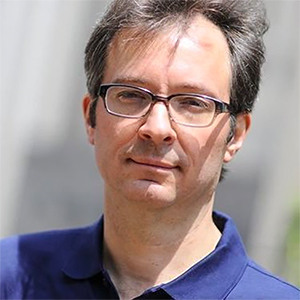
Carlo Ratti is a professor at MIT and Politecnico di Milano and director of the Senseable City Lab.
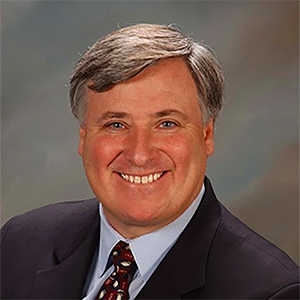
Biondo Biondi is professor of geophysics at Stanford, where he directs the Stanford Earth Imaging Project.
©2026 Los Angeles Times. Visit at latimes.com. Distributed by Tribune Content Agency, LLC.

























Comments