Home Robotics in the Modern World
Published in Home and Consumer News
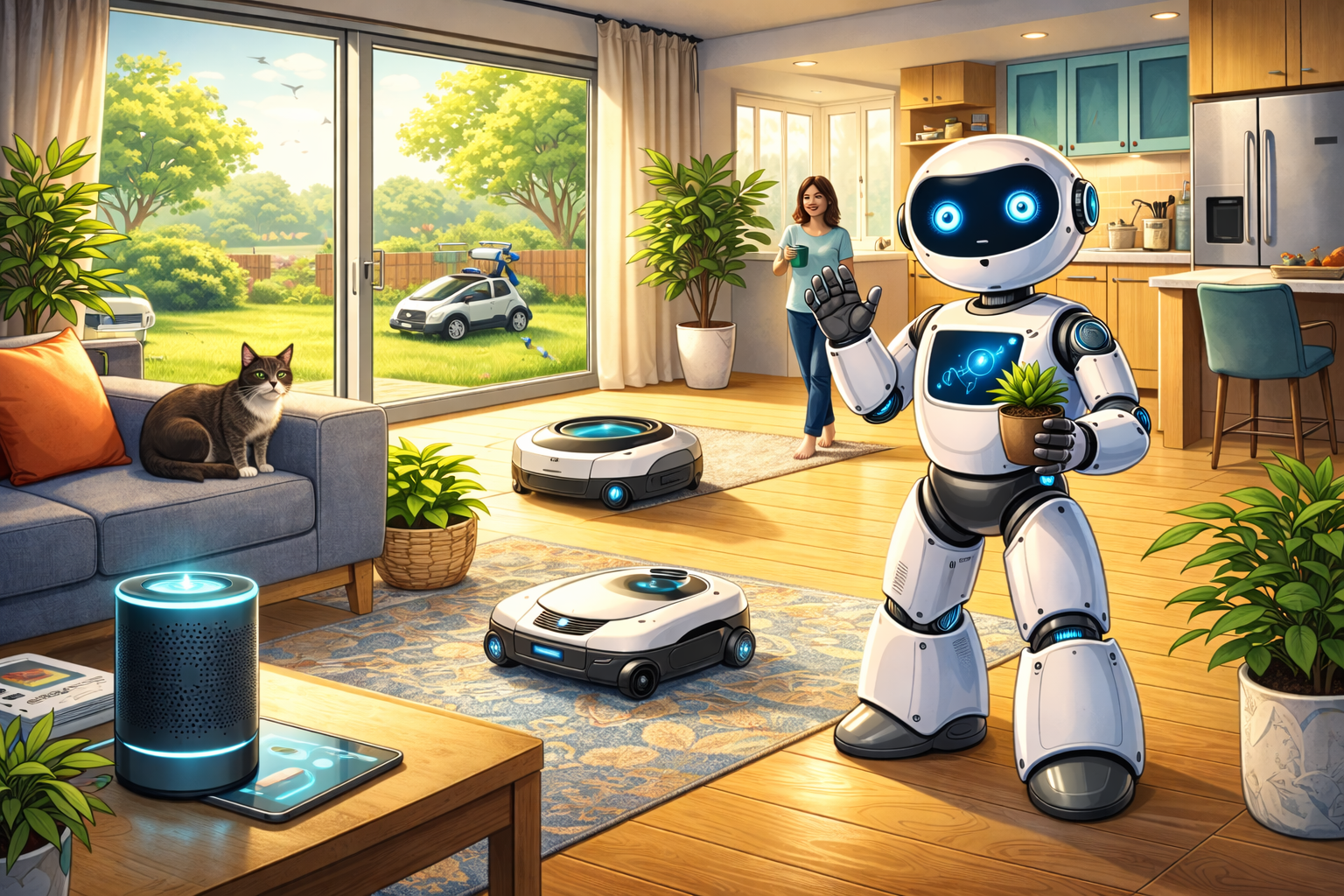
Home robotics, once the domain of science fiction and speculative design, has steadily moved into the mainstream, reshaping how people clean, cook, monitor and even interact within their homes. What began with simple, single-purpose machines has evolved into a growing ecosystem of connected devices that promise convenience, efficiency and, increasingly, companionship.
From autonomous vacuum cleaners to voice-activated assistants and robotic lawn mowers, the modern household is becoming a testbed for automation. Industry analysts estimate that tens of millions of homes worldwide now contain at least one form of domestic robot, a number expected to rise sharply as costs fall and capabilities expand.
“Home robotics is no longer a novelty,” said Dr. Lena Ortiz, a robotics researcher specializing in human-machine interaction. “It’s becoming infrastructure — something people rely on without thinking about it.”
From single-task machines to smart ecosystems
The first widely adopted home robots were designed with narrow functions. Robotic vacuums, introduced in the early 2000s, navigated floors using basic sensors and randomized patterns. Today’s versions map entire homes, adapt to furniture layouts and integrate with smartphone apps and voice commands.
This evolution reflects a broader trend: the shift from isolated devices to interconnected systems. Many modern robots communicate with other smart home technologies, such as lighting, thermostats and security systems, creating coordinated environments that respond to user behavior.
For example, a robotic vacuum may begin cleaning when sensors detect that residents have left the house, while a smart assistant can adjust temperature settings and lock doors. These interactions are often managed through centralized platforms, allowing users to control multiple devices from a single interface.
The result is a home that operates with a degree of autonomy, performing routine tasks with minimal human input.
Convenience, accessibility and changing lifestyles
Advocates of home robotics emphasize the time-saving benefits. Routine chores such as vacuuming, mopping and lawn care can be delegated to machines, freeing up hours each week. For busy households, this shift can be transformative.
Equally significant is the role robotics plays in accessibility. For older adults and individuals with mobility challenges, domestic robots can support independent living. Devices that assist with lifting, medication reminders or remote monitoring provide both practical help and peace of mind.
“Robotics can extend the time people are able to live comfortably in their own homes,” said Ortiz. “That has major implications for aging populations.”
The COVID-19 pandemic also accelerated adoption. With more people working from home, interest in automation grew, particularly for tasks that could reduce daily friction. Sales of cleaning robots and smart home devices surged during this period, reinforcing their place in everyday life.
At the same time, expectations have shifted. Consumers increasingly seek products that are intuitive, reliable and seamlessly integrated into their routines, rather than gadgets that require constant oversight.
Privacy, security and ethical concerns
As home robots become more capable, they also raise questions about privacy and data security. Many devices rely on cameras, microphones and sensors to navigate and perform tasks, collecting detailed information about household environments.
That data can be valuable for improving performance, but it also introduces risks. Unauthorized access, data breaches or misuse of information remain ongoing concerns for consumers and regulators alike.
“Any device that maps your home or listens for commands is handling sensitive information,” said cybersecurity analyst Marcus Feld. “Manufacturers have to be transparent about how that data is used and protected.”
There are also broader ethical considerations. As robots take on more roles traditionally performed by humans, questions arise about dependency, job displacement and the nature of human interaction.
Companion robots, designed to provide social engagement or emotional support, highlight these complexities. While they may benefit individuals experiencing isolation, critics argue that substituting machines for human connection could have unintended consequences.
Regulation has struggled to keep pace with rapid technological advancement. Policymakers are beginning to explore standards for data protection, safety and interoperability, but the landscape remains fragmented.
The road ahead: toward more capable and adaptive systems
Looking forward, experts anticipate continued innovation in home robotics, driven by advances in artificial intelligence, sensor technology and materials science. Future devices are expected to be more adaptable, capable of handling a wider range of tasks and responding to dynamic environments.
One area of development is general-purpose robotics — machines that can perform multiple functions rather than a single dedicated task. While still in early stages, these systems aim to assist with activities such as tidying, organizing or even basic meal preparation.
Improved human-robot interaction is another focus. Designers are working to make robots more intuitive and responsive, reducing the need for explicit commands. Voice, gesture and contextual awareness are all being refined to create more natural interactions.
Affordability will also play a critical role. As manufacturing scales and technology matures, prices are expected to decrease, making advanced robotics accessible to a broader range of households.
Despite these advances, experts caution that widespread adoption of highly capable home robots will take time. Technical challenges, cost barriers and consumer trust all influence how quickly new technologies are embraced.
“People don’t just adopt technology because it exists,” Ortiz said. “They adopt it because it fits into their lives in a meaningful way.”
For now, home robotics occupies a space between innovation and integration — a field rapidly evolving but still finding its place in the fabric of daily living. As devices become more capable and interconnected, the modern home may continue its transformation into an environment where machines quietly handle the ordinary, allowing people to focus on the extraordinary.
========
Callen Vire is a technology and society reporter who covers emerging innovations and their impact on everyday life. He writes about the intersection of automation, culture and human behavior. This article was written, in part, utilizing AI tools.







Comments