Amy Klobuchar elected Minnesota governor, Democrats win other statewide offices
Published in News & Features
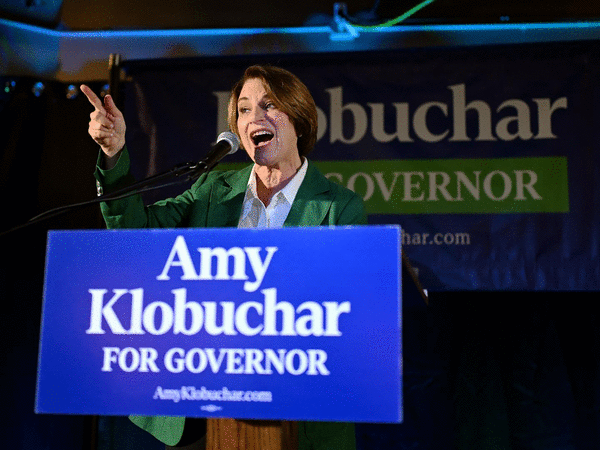
ST.PAUL, Minn. — Democratic U.S. Sen. Amy Klobuchar won the election for Minnesota governor on Tuesday, defeating Republican state House Speaker Lisa Demuth. Klobuchar will be the first woman to hold the office in Minnesota’s history.
Unofficial results as of 11 p.m. Thursday showed Klobuchar held a decisive lead, with 56% of the vote to Demuth’s 42%, with 70% of precincts reporting results. Klobuchar said Demuth called her to concede the race.
“I am going to be a governor, not just for the people that voted for me, but for all of Minnesota,” Klobuchar told reporters as they awaited results. “When I said that we do not like the status quo, I meant it. We have a lot of work to do.”
Klobuchar will be the third consecutive Democratic-Farmer-Labor governor and will take office after Gov. Tim Walz’s term expires at the beginning of next year.
Walz served two terms and suspended his campaign for a third as scrutiny mounted on his record handling hundreds of millions in fraud in state welfare programs, which one federal prosecutor described as “industrial scale.”
DFL candidates sweep statewide offices
Meanwhile, Democratic-Farmer-Labor candidates handily won all statewide races in a punishing night for Republicans nationally.
In the U.S. Senate race, DFL Lt. Gov. Peggy Flanagan defeated Republican Michele Tafoya.
DFL Attorney General Keith Ellison won a third term in the race against Republican Ron Schutz and DFL Secretary of State Steve Simon won a fourth term, defeating Republican Tad Jude.
Democrats also held on to the state auditor’s office, with Zack Filipovich beating Republican Scott Jensen.
Fraud a central issue in campaign
Fraud, and who was best qualified to tackle it, was a central theme in the 2026 election. Demuth argued that as a Democrat, Klobuchar would struggle to address a problem that had grown during the last eight years of a DFL administration.
But Klobuchar herself was openly critical of Walz during a televised debate, saying he should have “caught the fraud earlier.”
As governor, Klobuchar has promised to fight fraud by conducting a “day one top-to-bottom audit of state agencies,” creating a “Do Not Pay” database, and pursuing stricter enforcement and penalties.
Besides fraud, Klobuchar campaigned on a platform centered on affordability. In the months leading to Election Day, she announced plans to push for 100,000 new housing units, create a tax credit to offset the expiration of Affordable Care Act subsidies and address the cost of prescription drugs by expanding state bulk purchasing.
When Demuth won the Republican nomination for governor in the August primary, many longtime observers of Minnesota politics — DFL, Republican and independent — noted that the contest featured two highly qualified candidates making for a potentially competitive race.
Tuesday’s results suggest those expectations may have been overblown. Klobuchar has handily won four statewide elections since she was first elected to the Senate in 2006, and most polling in the governor’s race indicated she had an edge over Demuth.
Republican groups poured millions of dollars into the race at levels not seen in recent history but weren’t able to give Demuth much of an advantage. October financial disclosures to the Minnesota Campaign Finance Board showed a total of around $19 million of campaign and outside spending to support or oppose either candidate.
Tariffs, Iran war
Republicans were widely expected to suffer losses in the U.S. midterm elections, in part due to backlash against Republican President Donald Trump’s unpopular policies like tariffs and the war in Iran, which have driven up the price of fuel and goods.
That and the Trump administration’s winter immigration crackdown in Minnesota, which led to the deaths of two activists during clashes with federal agents, were major drivers of Democratic turnout, party leaders said. DFL Chair Richard Carlbom called his party’s wins a “repudiation” of Donald Trump’s agenda.
While final turnout numbers were not available Tuesday night, early voting numbers had already far surpassed the last record for a midterm election in Minnesota set in 2022.
During Minnesota’s gubernatorial campaign, Klobuchar, like other Democrats seeking office in Minnesota, said her Republican opponent would function as a “rubber stamp” for the president.
What’s next?
Klobuchar will take office with a new Legislature that will have to create a new two-year state budget by the end of spring.
While Minnesota has some financial padding in the short term, growing costs in government programs will eventually mean the state is spending more than it takes in by the end of the decade, according to Minnesota Management and Budget.
The new governor will have to balance her pledge to not raise taxes with preserving government programs supported by fellow Democrats.
Klobuchar will also have to resign from the U.S. Senate in order to take her new job as governor. There are four years left in her current six-year term, and either she or Walz will have to appoint someone to the vacancy.
Neither Klobuchar nor Walz has shared who will make the appointment or who they will choose to fill the vacancy.
_____
©2026 MediaNews Group, Inc. Visit at twincities.com. Distributed by Tribune Content Agency, LLC.


Comments