University of Alaska regents move to eliminate undergraduate out-of-state tuition rates
Published in News & Features
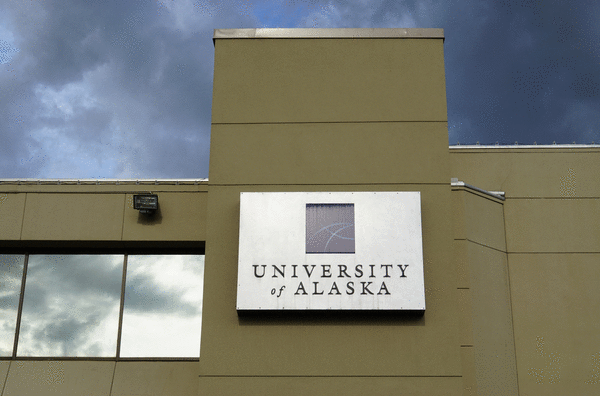
ANCHORAGE, Alaska — The University of Alaska Board of Regents voted Tuesday to eliminate higher tuition rates for students with out-of-state residency.
Regents voted unanimously in favor of the change, but final approval will not occur until November, when regents vote on tuition rates for the 2027-28 school year.
University finance officials said the move will not cost the school much money, but might attract more students from other states to attend the University of Alaska.
The tuition change would mostly apply to freshman students from out-of-state, according to regent Karen Perdue. Sophomores and upperclassmen typically qualify for in-state resident rates after their first year in Alaska.
Other programs and initiatives already exist to offer out-of-state students reduced tuition rates. Aparna Palmer, chancellor for the University of Alaska Southeast, said the school will allow out-of-state students at UAS to pay in-state tuition rates as part of its Alaska Unlocked initiative launching this fall.
“This has been a real game-changer for us,” Palmer said. “It has allowed us to increase the number of out-of-state students.”
Currently, students from 13 states can qualify for the Western Undergraduate Exchange program, which offers tuition at 150% of the rate for in-state students. Students in Hawaii as well as roughly the western third of the Lower 48 — from West Coast states through North Dakota, South Dakota, Wyoming, Colorado and New Mexico — can qualify for the program.
Nonresident students make up about 16% of the more than 20,000 students who attend UA system-wide. Luke Fulp, chief financial officer for the UA system, said the University of Alaska Fairbanks and the University of Alaska Anchorage receive about $1.4 million in tuition from nonresident students.
Former UA President Pat Pitney said in her 2025 State of the University Address that three-quarters of UA graduates stay in Alaska. Officials expect that an increase in out-of-state students will bolster the local workforce.
“Universities across the country are looking at being more competitive and offering more affordable tuition proposals to students,” Fulp said. “And so, this is an effort for us to stay competitive in that marketplace and really make Alaska a destination for higher education.”
Fulp projects the University of Alaska Anchorage would lose about $372,000 in the first year, but break even after three years — the equivalent of 55 additional nonresident students.
The tuition reduction would also apply to international students.
Owen Guthrie, vice chancellor for enrollment management and student affairs at UAF, said the idea is a risk worth taking to attract more qualified professionals. UAF staff will market the reduced tuition rates to potential students with print materials, emails and ads on social media and streaming services.
“From an enrollment perspective, this is the best thing since sliced bread,” Guthrie said. “Those 270,000 prospective students, those are future, highly skilled, highly trained Alaskans, and we’re excited to bring them here to this program.”
The University of Alaska Fairbanks is projected to break even at just over 100 students in the second year, according to Fulp’s presentation.
Fulp said the elimination of nonresident tuition will also reduce confusion for students from out of state, and reduce the administrative burden of charging increased rates. Fulp said 85% of nonresident students receive some form of waivers, which often leads to surprises when students receive their bill. The rate reduction would not apply to student fees.
_____
©2026 Anchorage Daily News. Visit at adn.com. Distributed by Tribune Content Agency, LLC.






Comments